
Drawing parallels between a paper plate and mental health requires a bit of creative thinking, but here are a few similarities;
1. Versatility:
Like a paper plate’s ability to serve various types of food, mental health can manifest in diverse ways. Individuals may experience a range of emotions, thoughts, and behaviors, similar to how a paper plate can be used for different purposes beyond just serving food.
2. Fragility:
Both mental health and a paper plate can be fragile. Just as a paper plate can tear or bend under pressure, mental health can be affected by stress, trauma, or external factors. Both require care and attention to maintain their integrity.
3. Disposable Nature:
Paper plates are often discarded after use, much like the disposable nature of mental health stigma. Unfortunately, mental health issues are sometimes overlooked or dismissed, contributing to a societal tendency to “throw away” or ignore these concerns rather than addressing them.
4. Adaptability:
Paper plates are adaptable to different environments and situations, much like how individuals with mental health challenges can learn to adapt and cope with their circumstances. Both mental health and paper plates can demonstrate resilience and the ability to navigate changing conditions.
5. Simplicity:
There’s a simplicity to both a paper plate and mental health. While mental health issues can be complex and multifaceted, addressing them often requires a return to basics, focusing on self-care, support systems, and simple interventions to promote well-being.
These comparisons are metaphorical and may vary in their applicability depending on the context. The goal is to encourage reflection on the diverse aspects of mental health and its relation to everyday objects and experiences.
Can a paper plate be used to exercise and grow abstract thinking skills
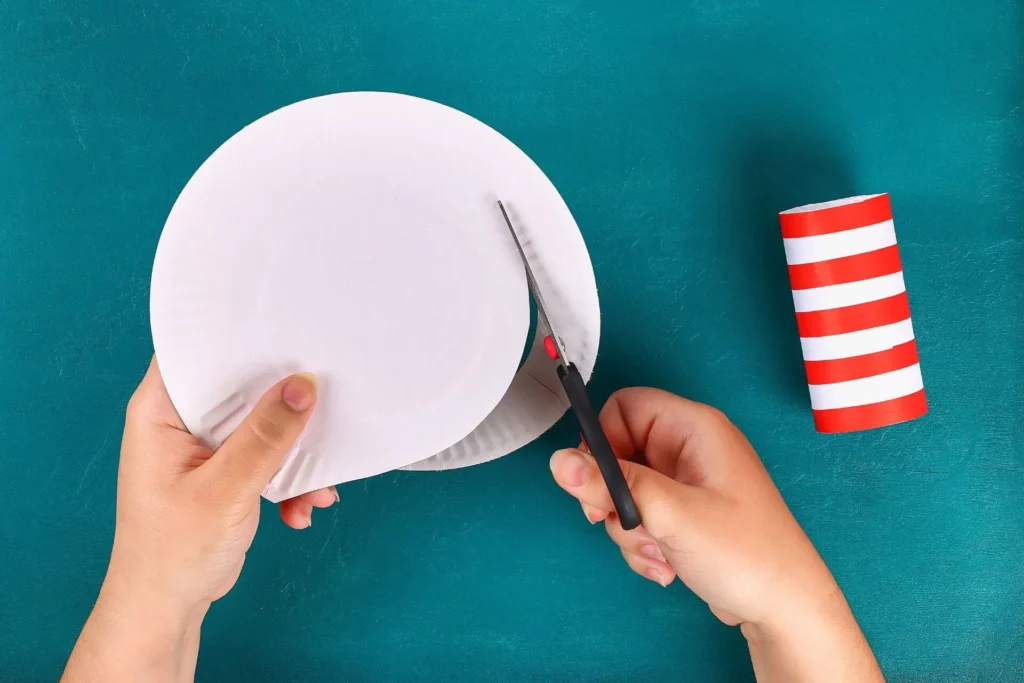
Using a paper plate as a tool for abstract thinking requires a bit of creativity and imagination. Here are a few ways it could be utilized:
1. Metaphorical Exercise:
Encourage individuals to think metaphorically about the paper plate. Ask them to consider what the paper plate represents in their lives or in a given situation. This exercise can help stimulate abstract thinking by challenging individuals to explore different perspectives and associations.
2. Problem-Solving Activity:
Use the paper plate as a prop in a problem-solving activity. Present individuals with a problem or scenario and ask them to brainstorm creative solutions using the paper plate as a visual aid. This activity can help foster abstract thinking by encouraging individuals to think outside the box and consider unconventional approaches.
3. Storytelling Exercise:
Invite individuals to create a story or narrative inspired by the paper plate. Encourage them to use their imagination and incorporate abstract concepts or themes into the story. This exercise can help develop abstract thinking skills by encouraging individuals to explore abstract ideas in a creative and expressive way.
4. Artistic Expression:
Provide individuals with art supplies and invite them to use the paper plate as a canvas for artistic expression. Encourage them to create abstract art or designs that reflect their thoughts, feelings, or ideas. This activity can help individuals engage with abstract concepts in a tangible and hands-on way.
5. Mind Mapping:
Use the paper plate as a central point in a mind mapping exercise. Encourage individuals to brainstorm ideas, connections, and associations related to a specific topic or theme, using the paper plate as a starting point. This exercise can help stimulate abstract thinking by visually representing the interconnectedness of ideas.
Overall, using a paper plate as a tool for abstract thinking requires creativity, imagination, and an open mind. By incorporating the paper plate into various activities and exercises, individuals can develop their abstract thinking skills and explore new ways of thinking and problem-solving.